Project Case
What are the valve applications in gas engineering in Saudi Arabia
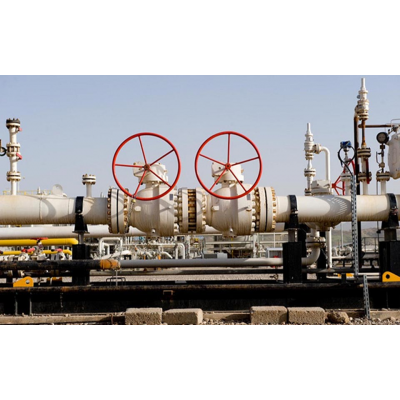
I. Valves in transmission pipelines
1. Shut-off valve: Installed at the start and end points of long-distance gas transmission pipelines as well as branch points, it is used to quickly cut off the gas flow during pipeline maintenance, inspection, or emergencies to prevent the spread of accidents.
2. Regulating valve: Set between high-pressure transmission pipelines and urban gas distribution networks, it is used to regulate gas pressure to ensure the safety of downstream users.
3. Safety valve: When the pipeline pressure abnormally rises, the safety valve automatically opens to release some gas to prevent damage to the pipeline and equipment due to excessive pressure.
II. Valves in storage facilities
1. Inlet and outlet valves: Connect gas storage tanks or underground storage facilities to the transmission pipelines to control the inflow and outflow of gas and ensure that the storage volume meets the demand.
2. Pressure balance valve: Maintains the internal pressure of the storage facilities stable to avoid equipment damage or leakage risks due to excessive pressure fluctuations.
3. Emergency shut-off valve: In case of leakage, fire, or other emergencies, it quickly cuts off the gas source to prevent the expansion of the accident.
III. Valves in urban distribution systems
1. Pressure regulating valve: Installed on urban gas distribution pipelines, it regulates the gas pressure in different areas to ensure stable pressure at the user end.
2. Flow control valve: Adjusts the gas flow according to user needs to achieve a balance between supply and demand and avoid waste and shortage.
3. User-end valves: Installed on user introduction pipes, they are convenient for users to turn on and off gas and are also important control points for gas companies during safety inspections.
IV. Valves in special application scenarios
1. Leak detection valve: Installed at potential leakage locations to monitor gas concentration in real time. Once a leak is detected, it immediately alarms and cuts off the gas source.
2. Anti-backflow valve: Prevents gas from flowing in the opposite direction in case of pressure fluctuations or pipeline damage, avoiding secondary pollution or safety accidents.
3. Electric/ pneumatic valves: Controlled remotely through automated control systems, improving operational efficiency and safety, especially in remote areas without human supervision.
There are various types of valves in gas engineering with diverse functions. However, their core objective is to ensure the safe and stable operation of the gas system. With the advancement of technology, intelligent valves and remote monitoring systems are becoming increasingly widespread, and the role of valves in gas engineering will become more intelligent and efficient. In the future, through continuous technological innovation and application optimization, valves will continue to play a key role in ensuring the safety of urban gas.
 +86 15122654356
 +86 15122654356
 sale2@tjlituo.com
 Xiaozhan Industrial Area, Xiaozhan Town, Jinnan District ,Tianjin , China