Project Case
The significant role and application of Singapore butterfly valves in HVAC systems
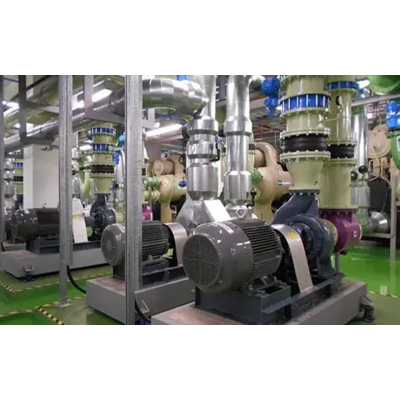
In HVAC systems, valves are one of the core control components, directly influencing the operational efficiency and stability of the system. The butterfly valves for HVAC systems, with their compact structure, rapid opening and closing, and reliable sealing, have become the key equipment for fluid control in HVAC systems. The important roles of HVAC butterfly valves
1. Precise flow control
The HVAC system needs to adjust the flow of cold water, hot water or air according to changes in indoor and outdoor temperatures. The butterfly valve achieves rapid opening and closing by rotating 90°, combined with electric or pneumatic actuators, can precisely regulate the medium flow, meeting the load requirements of end devices (such as fan coil units, radiators) of the air conditioning system.
2. Energy saving and system stability
Low flow resistance design: The valve plate of the butterfly valve is thin, and the fluid resistance is only 1/3 of that of the gate valve, significantly reducing the energy consumption of the water pump.
Sealing reliability: The valve adopts soft sealing or three-eccentric hard sealing technology, avoiding energy loss caused by internal leakage, ensuring the efficient operation of the system.
3. Adaptation to complex working conditions
HVAC systems often encounter low temperatures, high temperatures or humid environments. The butterfly valve uses corrosion-resistant stainless steel or aluminum alloy materials and through a multi-layer sealing structure, effectively coping with condensate water, low-temperature condensation and high-temperature steam working conditions.
III. Application scenarios of HVAC butterfly valves
1. Air conditioning water circulation system
Water pipe control for cooling and heating: Used to regulate the water flow between the cooling unit, heat pump and end devices, supporting dynamic adjustment of the variable frequency air conditioning system.
Condensate water discharge control: Combined with anti-corrosion soft-sealing butterfly valves, it prevents the pipeline from being corroded by condensate water, ensuring smooth drainage.
2. Ventilation and air treatment system
Air duct flow regulation: Through pneumatic or electric butterfly valves, quickly open and close to control the fresh air, return air and exhaust air volume, optimizing indoor air quality.
Anti-freezing protection: In winter, in low-temperature environments, anti-condensation butterfly valves can avoid the risk of pipe freezing due to internal condensation, reducing the risk of pipe cracking.
3. Cold and heat source equipment matching
Boiler and heat exchange station: Three-eccentric hard-sealing butterfly valves are suitable for high-temperature steam or high-pressure hot water pipelines, ensuring heat exchange efficiency and safety.
 +86 15122654356
 +86 15122654356
 sale2@tjlituo.com
 Xiaozhan Industrial Area, Xiaozhan Town, Jinnan District ,Tianjin , China