Project Case
The Structure and Application of Russian Standard Gate Valves
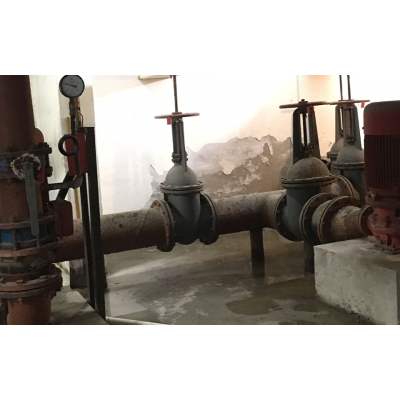
I. Structural Design of Russian Standard Gate Valves
1. Valve Body and Materials
Russian standard gate valves are typically made of cast steel or stainless steel, with a full-bore design to minimize fluid resistance. According to standards, the nominal pressure range is from PN16 to PN100, and the applicable temperature is -60°C to 450°C. The valve body flange connection dimensions comply with GOST to ensure compatibility with pipelines.
2. Gate and Drive Mechanism
Parallel Gate: Double gate design with hard alloy overlay on the sealing surface, increasing wear resistance by more than 30%.
Rising Stem Structure: Two types, namely, rising stem (suitable for above-ground installation) and non-rising stem (for underground or confined spaces), with stroke heights precisely matching GOST requirements.
3. Sealing System
The valve seat seal uses elastic graphite or PTFE materials. For high-pressure conditions (>PN40), a self-tightening sealing ring is added to ensure zero leakage.
II. Application Fields of Russian Standard Gate Valves
1. Oil and Gas
DN300 to DN600 gate valves are widely used in Siberian oil fields, with a pressure resistance of PN63 and the ability to withstand extremely cold temperatures of -45°C.
2. Chemical and Power
In chemical plants, stainless steel gate valves are used for corrosive media, with acid and alkali resistance in the pH range of 2 to 12.
3. Municipal and Water Conservancy
The Moscow water supply system uses DN150 gate valves. In Far Eastern water conservancy projects, gate valves are equipped with electric actuators, with opening and closing times of no more than 60 seconds.
 +86 15122654356
 +86 15122654356
 sale2@tjlituo.com
 Xiaozhan Industrial Area, Xiaozhan Town, Jinnan District ,Tianjin , China