Project Case
Application of Valves in Air Conditioning Water Systems in Singapore
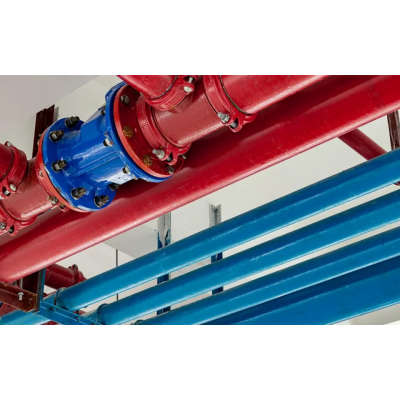
In the HVAC (Heating, Ventilation, and Air Conditioning) system, the water system serves as the core for achieving heat and cold exchange, and its safety, stability, and efficiency are of utmost importance. Valves, as the key components in the water system, are responsible for functions such as opening and closing, regulation, protection, filtration, and control.
In air conditioning water systems, the circulating water systems are typically divided into open and closed types. These two systems have their own characteristics and are suitable for different application scenarios.
The open circulating water system refers to those where some pipes are directly connected to the atmosphere. This design makes the water quality of the system easily affected by the external environment, thus prone to contamination. Such systems are commonly used in the cooling water field, for example, in the cooling water side of cooling towers and chiller units. Due to the direct connection of some pipes in the open circulating water system to the atmosphere, it is susceptible to contamination, so regular drainage and replenishment, as well as filtration and anti-corrosion measures, are necessary.
The closed circulating water system refers to the entire operation process taking place in a closed environment, without direct contact with the outside atmosphere. This system is widely used in the fields of chilled water and heating water. The advantages of the closed circulating water system include stable water quality and low leakage, with significant benefits including stable water quality, low leakage rate, and excellent energy-saving performance. To ensure the normal operation of the system, expansion water tanks or pressure stabilizing devices are usually required.
In closed circulating water systems, valves, as key components, play a crucial role. Depending on different usage scenarios and requirements, there are various types of valves. These valves not only control the flow direction and flow rate of the fluid but also ensure the safe and stable operation of the system.
Gate valves, also known as gate plates, are indispensable cutting-type valves in the pipeline system, used for full opening or full closing conditions, and are not suitable for precise throttling regulation. By the up and down movement of the gate plate, its moving direction is perpendicular to the fluid direction, thereby controlling the opening and closing of the channel. When the gate plate is fully raised, the flow passage will be unobstructed; when it is closed, it will enhance the sealing surface's adhesion force through the top mold, spring, or wedge structure to ensure that the medium cannot pass through, providing reliable sealing.
Stop valves, also known as shut-off valves, use the valve stem to press the valve disc downward against the valve seat sealing surface, forming a tight seal to prevent the flow of the medium. Additionally, its flow channel design is S-shaped, giving it certain throttling capacity.
Ball valves, with their lightweight structure and flexible operation, are ideal choices for opening and closing and regulating large and medium-sized pipeline systems. The valve disc is designed as a circular butterfly plate, rotating around the axis of the valve body, usually at 90°. When the butterfly plate is perpendicular to the flow channel, the valve is closed; when it is parallel to the flow channel, the valve is fully open. By adjusting the angle of the butterfly plate, precise control of the flow can be achieved, and the operation is flexible.
Ball valves, with their ball as the closing element, combined with rotational motion, exhibit excellent sealing performance and rapid opening and closing characteristics. Just by rotating 90° around the valve stem axis, the valve can be easily converted from closed to open, achieving rapid opening and closing.
Check valves, also known as reverse flow valves or one-way valves, prevent the reverse flow of the medium, thereby ensuring the safe operation of the equipment.
Y-type filters, as key protective components in the pipeline system, their core function is to intercept solid impurities in the medium, ensuring the stable operation of the equipment, and require regular maintenance.
Pressure reducing valves, an indispensable component in the pipeline system, aim to smoothly reduce the excessively high inlet pressure to the preset stable outlet pressure, suitable for high-rise buildings.
Self-operated temperature control valves, a temperature control device without external power or signals, automatically sense and regulate the medium flow through the temperature sensing element, achieving constant temperature control.
Safety valves, also known as pressure relief valves, are an important device to protect the system from overpressure hazards, belonging to mandatory safety accessories. Static balance valve, also known as manual balance valve or digital lock balance valve, mainly functions during the initial adjustment stage of the system. Through it, the designed flow distribution of each branch can be precisely achieved.
Dynamic balance valve has the ability to automatically maintain the set flow stable when the system pressure fluctuates, thus achieving dynamic hydraulic balance.
Electromagnetic valve is an automatic valve driven by an electromagnetic coil and is a basic actuating element in the fluid control system.
Electric valve is driven to open, close or adjust the flow by an electric actuator, thereby enabling remote or automated operation of fluid control.
Electric three-way valve has three connection ports and realizes the mixing or diversion of two fluids.
Electric differential pressure bypass valve plays a crucial role in variable flow systems, able to maintain the stability of the flow on the cold source side, thereby protecting the chiller from damage.
Steam trap is an indispensable device in the steam system, capable of automatically removing condensate water, air and other non-condensable gases, and effectively preventing steam leakage.
 +86 15122654356
 +86 15122654356
 sale2@tjlituo.com
 Xiaozhan Industrial Area, Xiaozhan Town, Jinnan District ,Tianjin , China