INDUSTRY NEWS
The working principles and application scenarios of six common valves
Valve basics
Function of valves: Valves are devices used in pipeline systems to control the flow of liquids or gases. Their main functions include: opening and closing function: like a faucet, it can control the on-off of the fluid and achieve control of the pipeline system. Regulating flow: by changing the opening and closing size of the valve, the flow of the fluid in the pipeline can be controlled. Safety protection: Valves also have safety protection functions such as preventing backflow (like check valves) and overpressure relief (like safety valves) to ensure the safe operation of the pipeline system.
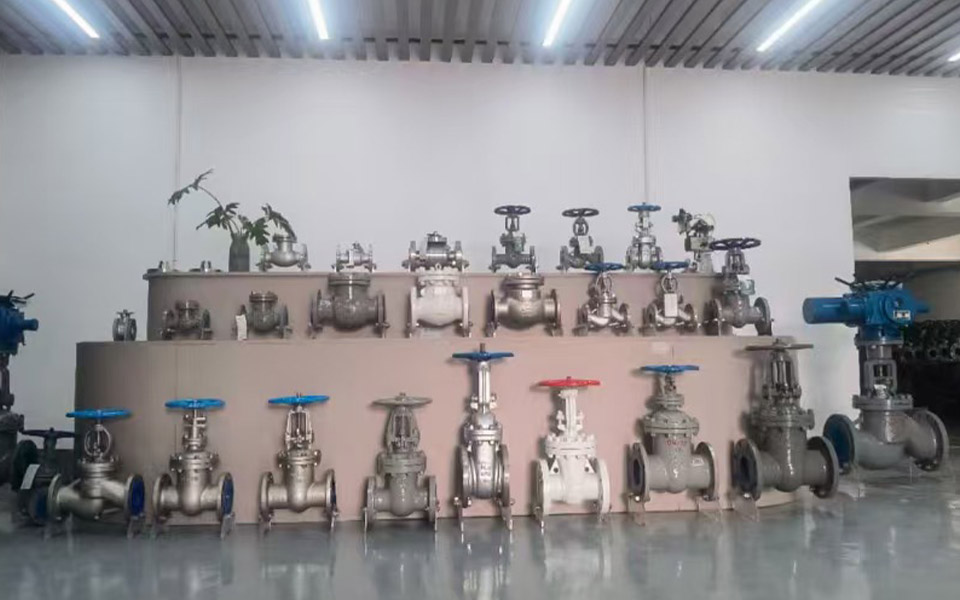
Classification of valves: The classification of valves is diverse and can be classified according to the following different standards, as follows: by function: shut-off valves (such as gate valves, globe valves), regulating valves, check valves and safety valves, etc. by structure: ball valves, butterfly valves, gate valves, etc., valves of different structures are suitable for different application scenarios. by driving method: manual, electric and pneumatic, the higher the automation degree, the more convenient the operation.
Six common valves
1. Gate valve: The main door of the pipeline
Working principle: The gate valve achieves full opening or full closing by lifting the gate plate. The gate plate moves along the axis of the valve body. When the gate plate is fully closed, the flow of the fluid is cut off; when the gate plate is fully opened, the flow of the fluid is unobstructed, like the principle of a sliding door.
Features: The flow resistance is minimal when fully open, suitable for scenarios requiring direct flow; the opening and closing speed is slow, not suitable for frequent operation.
2. Globe valve: The expert for precisely regulating flow
Working principle: The globe valve is a valve that regulates the flow area by the vertical movement of the valve disc. Its closure element is a cylindrical valve disc, and the sealing surface is designed as a flat or conical structure. The valve disc moves in a straight line along the center line of the fluid to achieve the opening and closing function. When the handwheel is rotated, the valve stem rises or drops, driving the valve disc to make a parallel linear displacement along the direction of the fluid flow, thereby controlling the opening and closing state of the valve.
Features: The flow resistance is minimal when fully open, suitable for scenarios requiring direct flow; the opening and closing speed is slow, not suitable for frequent operation.
3. Ball valve: The swift rotating master
Working principle: The ball valve achieves the on-off or regulation of the fluid by rotating the ball core. When the ball core rotates to align the channel with the pipeline, the fluid can flow freely; when the ball core rotates to be perpendicular to the pipeline, the fluid is completely blocked.
Features: The opening and closing is rapid, the sealing performance is good, it can withstand high pressure, and the sealing surface is prone to wear, not suitable for fluids containing impurities.
4. Butterfly valve: The energy-saving choice for large-diameter pipelines
Working principle: The butterfly valve controls the flow of the fluid by the rotation angle of the butterfly plate between 0° and 90°. It is basically in a linear proportion change, the larger the angle, the greater the flow.
Features: Small in size, light in weight, suitable for large pipe diameters; the regulation accuracy is low, but performs better in low-pressure difference scenarios.
5. Check valve: The guardian against backflow
Working principle: The check valve opens and closes by the pressure of the medium itself, preventing the backflow of the fluid.
Common types: Rising type and swing type. The rising type is commonly used in vertical pipelines, while the swing type is commonly used in horizontal pipelines.
6. Safety valve: The "safety barrier" of the pressure system
Working principle: If the system pressure exceeds the predetermined threshold, the safety valve will automatically start and perform a pressure relief operation to ensure that the pipeline system is not damaged.
Key parameters: Opening pressure, seating pressure and discharge capacity, etc.
Valves are key devices for controlling the flow of media, therefore, in the selection, installation and maintenance of valves, we must strictly follow relevant norms and standards.
During installation, attention should be paid to the installation direction of the valve, the supporting structure and the cleanliness of the pipeline, to avoid valve failure caused by improper installation. In daily maintenance, we should regularly check the sealing performance, lubrication condition and whether there is impurity accumulation, to ensure that the valve is in good working condition.
 +86 15122654356
 +86 15122654356
 sale2@tjlituo.com
 Xiaozhan Industrial Area, Xiaozhan Town, Jinnan District ,Tianjin , China