INDUSTRY NEWS
The definition, characteristics, sealing principle and classification of butterfly valves
Definition of Butterfly Valve
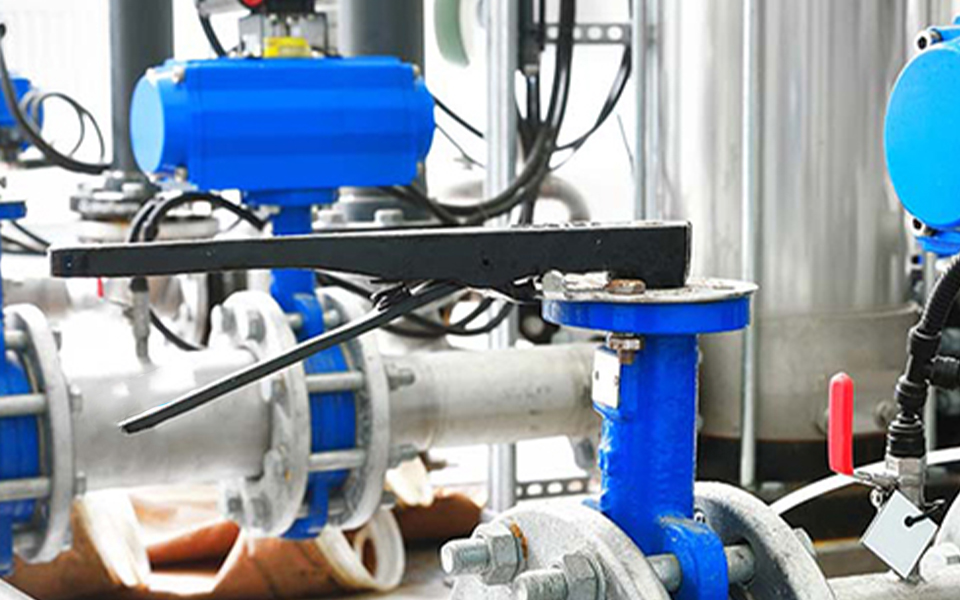
A butterfly valve is a type of rotary valve that uses a disc-shaped closure element (which can be circular or rectangular) to rotate 90° or approximately 90° to open or close the valve. The butterfly valve is an ancient type of valve. In the early days, due to poor sealing performance, it could only be used for regulation. For example, the flue valve is a type of regulating butterfly valve. With the emergence of elastic sealing materials such as synthetic rubber and the in-depth research on sealing structures, there emerged butterfly valves with seals. The appearance of elastic metal valve seats and new structural forms has made butterfly valves gradually adopted in high-temperature and low-temperature environments. Currently, the development trend of butterfly valves is that they can be used both for regulation and sealing.
Characteristics of Butterfly Valves
Butterfly valves have the advantages of simple structure, less thermal deformation, light weight, small space occupation, relatively low resistance, rapid opening and closing, small opening and closing power, good sealing performance, and long service life. Therefore, they are widely used. Especially in low-pressure large-diameter valves, their application is increasing. In summary, sealing butterfly valves are widely used in water systems and gas systems. For example, in municipal engineering's water supply and drainage systems, water power plants, nuclear power plants, various water supply systems, thermal power networks, and sewage treatment systems, the inlet valves of large-scale hydroelectric turbines, power, chemical, petroleum, metallurgy, ships, papermaking, urban gas, water supply and drainage systems, food industry, and even atomic energy and defense projects, butterfly valves have been adopted, and there is a trend towards higher and higher pressure. Butterfly valves can convey and control various liquids such as water, condensate water, sewage, seawater, and various gases such as air, gas, steam, dry powder, slurry, fruit pulp, and mixtures with suspended solids.
Sealing Principle of Butterfly Valves
The sealing principle of the valve is achieved by having a certain sealing pressure acting on the sealing surface. Butterfly valves are no exception. Generally, there are three forms of sealing for butterfly valves: (1) The sealing pressure is generated by interference. (2) The sealing pair is pressed together by direct pressure or torque, such as double eccentric butterfly valves, triple eccentric butterfly valves, and the sealing ring is filled with gas or liquid. (3) The Poisson effect is utilized to press the sealing ring with the medium pressure. The greater the upstream and downstream pressure difference, the easier the sealing. Sometimes, the elastic body with the elastic effect is also used. The middle section of the elastic body is thinner than the outer diameter or inner diameter. When the pressure acts, the structure allows the valve seat outer diameter to flex and make the contact surface seal.
Classification of Butterfly Valves
Butterfly valves can be classified in many ways. For example, they can be classified by purpose and function, such as cut-off type and regulating type; by structural form, they can be divided into centerline type, single eccentric, double eccentric, and triple eccentric butterfly valves; by sealing material, they can be classified as rubber-sealed butterfly valves, fluorine-containing seal butterfly valves, and metal-sealed butterfly valves.
 +86 15122654356
 +86 15122654356
 sale2@tjlituo.com
 Xiaozhan Industrial Area, Xiaozhan Town, Jinnan District ,Tianjin , China