INDUSTRY NEWS
Principles, Selection, and Industrial Applications of Fluoropolymer-Lined Valves
In industrial settings such as chemicals, environmental protection, pharmaceuticals, and metallurgy, corrosive media such as strong acids, strong alkalis, and strong oxidizing agents have long posed a major challenge to piping equipment. When exposed to highly corrosive operating conditions, ordinary carbon steel and stainless steel valves are prone to problems such as body corrosion, internal component damage, and media leakage. These issues not only increase equipment maintenance costs but also create potential safety hazards. Fluoropolymer-lined valves are a type of specialty valve designed specifically to solve the challenge of controlling highly corrosive media in piping systems.
What Are Fluoropolymer-Lined Valves?
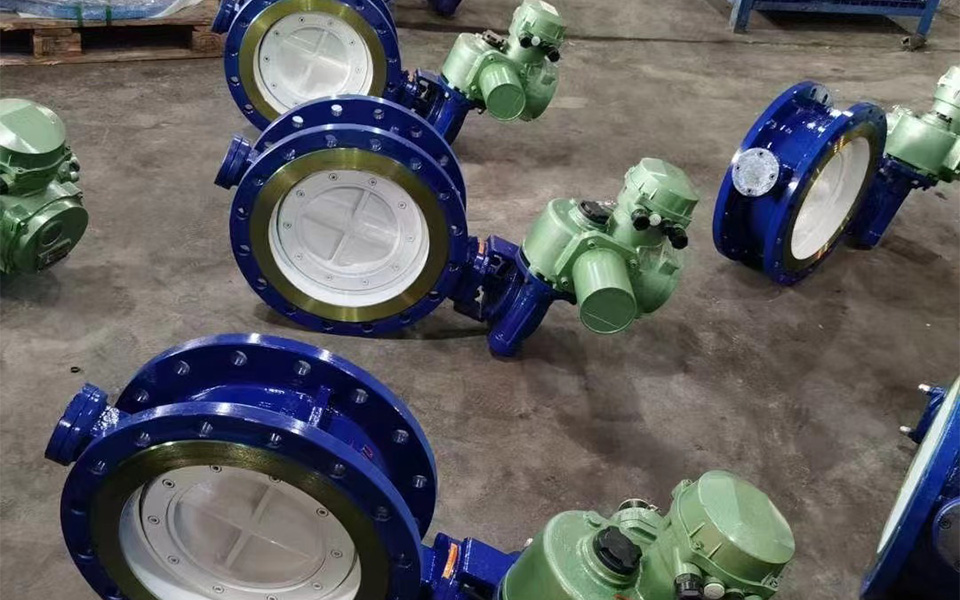
The full name of fluoropolymer-lined valves is fluoroplastic-lined valves. Their core concept is “strong exterior, corrosion-resistant interior”: the valve body shell is made of carbon steel or stainless steel to ensure overall structural strength and pressure-bearing capacity, while the surfaces of all components in contact with the media, such as the inner walls, valve plates, and balls, are lined with a layer of fluoroplastic material through compression molding or injection molding. Common materials include PTFE (polytetrafluoroethylene, commonly known as the “king of plastics”), F46 (FEP), and PFA.
Fluoroplastics are extremely chemically inert, and most strong acids, strong alkalis, and organic solvents are difficult to erode. The media come into contact only with the fluoroplastic lining and are completely isolated from the metal valve body, thereby preventing corrosion and damage to the valve body at the source.
Core Advantages and Objective Limitations of Fluoropolymer-Lined Valves
Main Advantages
Outstanding corrosion resistance: Except for a very few special media such as molten alkali metals and elemental fluorine, it can withstand sulfuric acid, hydrochloric acid, nitric acid, aqua regia, various strong alkalis, and most organic solvents, making it suitable for the vast majority of highly corrosive service conditions.
Stable sealing performance: Fluoroplastics have inherent self-lubricating properties, and soft-seal structures can achieve a relatively high sealing grade, effectively reducing the risk of media leakage. The inner wall of the lining is smooth, resists scaling and material buildup, and offers low flow resistance for the media.
No media contamination: Qualified fluoroplastic materials do not leach, making them suitable for the transfer of pharmaceuticals, fine chemicals, and electronic chemicals. They do not introduce metallic impurities into the fluid and meet the requirements of certain clean-process applications.
Controllable maintenance costs: Provided the operating conditions are properly matched, the service life of the valve can be significantly extended, reducing downtime losses caused by frequent valve replacement.
Usage limitations that cannot be overlooked
Fluoroplastic-lined valves are not a universal solution for corrosion protection, and their limitations must be avoided during selection:
Standard PTFE/F46 fluoroplastic-lined valves are generally suitable for temperatures of approximately 50°C to 150°C. Excessively high temperatures can cause the fluoroplastic to soften and deform, leading to damage and failure of the lining.
Not suitable for negative-pressure service: In negative-pressure environments, the fluoroplastic lining may be sucked outward and peeled away from the valve body.
Not resistant to erosion by hard particles: Long-term high-speed erosion by large amounts of hard solid particles in the media can wear and scratch the fluoroplastic lining. Once the lining is damaged, the metal valve body will be directly exposed to corrosion.
Limited in high-pressure applications: Due to the constraints of the lining structure, they are mostly used in medium- and low-pressure piping systems and are not suitable for ultra-high-pressure service.
Main application industries
Chemical and fine chemical industries: Chlor-alkali, dye, pesticide, and chemical intermediate production lines; inlet and outlet piping for various acid and alkali storage tanks and reactors; shut-off and regulation of highly corrosive raw material transfer.
Environmental protection, desulfurization, and wastewater treatment: Flue gas desulfurization slurry transfer in power plants and steel mills; treatment of hazardous chemical waste liquids and electroplating pickling wastewater; piping for treating waste liquids with high chloride ion content and strong acidity.
Pharmaceutical and food industries: Transfer of acidic and alkaline media in pharmaceutical synthesis and cleaning solvents; compliant lining materials are selected to ensure fluid cleanliness.
Metallurgy and electroplating industries: Pickling tanks and electroplating solution circulation piping, designed to withstand corrosive environments involving various acid solutions and salt solutions.
Some semiconductor auxiliary processes: Corrosive reagent transfer piping, with control of the risk of metal ion leaching.
 +86 15122654356
 +86 15122654356
 sale2@tjlituo.com
 Xiaozhan Industrial Area, Xiaozhan Town, Jinnan District ,Tianjin , China