INDUSTRY NEWS
What are the key points in valve selection?
In industrial piping systems, valves act as the “switches” that control the flow of media. Whether the selection is appropriate directly affects the safe operation of the system, energy consumption, and maintenance costs. In fields such as chemical engineering, water conservancy, and energy, selecting the wrong valve may lead to leaks, reduced efficiency, or even safety accidents.
Clarify the characteristics of the medium and determine the valve material
The physical and chemical properties of the medium are the primary basis for valve selection, as different media have vastly different “tolerance” requirements for valve materials.
Corrosive media, such as acid and alkali solutions and seawater, require corrosion-resistant materials. For example, for pipelines transporting hydrochloric acid, PTFE-lined valves can be used, as the polytetrafluoroethylene coating on the surface can resist strong corrosion. In sulfuric acid transport systems, cast iron valves are commonly used because cast iron has a certain passivating effect on concentrated sulfuric acid.
For media containing particles, such as slurry and mineral slurry, the wear resistance of the valve should be a key consideration. Ball valves and gate valves are common choices. The streamlined passage of a ball valve can reduce particle accumulation, while the use of hard alloy material for the gate plate of a gate valve can significantly extend its service life.
High-temperature and high-pressure media, such as steam and hot oil, impose strict requirements on valve strength and sealing performance. In such cases, forged steel or cast steel valves should be selected, and the sealing surface can adopt a metal hard-seal structure to prevent seal failure at high temperatures.
Match operating parameters to ensure stable operation
The operating parameters of a valve include pressure, temperature, and flow rate, all of which must be precisely matched to the design values of the piping system.
Pressure parameters are divided into nominal pressure and working pressure. Nominal pressure is the maximum allowable pressure of a valve at a reference temperature. During selection, the valve should be chosen according to the actual working pressure. For example, a pipeline with a working pressure of 1.6 MPa should use a valve with a nominal pressure of ≥1.6 MPa. At the same time, attention should be paid to the effect of temperature on pressure: in high-temperature environments, the pressure-bearing capacity of metallic materials decreases, so the nominal pressure rating should be appropriately increased.
Temperature parameters directly affect the selection of valve materials and seals. For normal-temperature conditions (-29°C to 120°C), ordinary cast iron or cast steel valves can be used. For medium-temperature conditions (120°C to 450°C), alloy steel should be selected. For high-temperature conditions (>450°C), special heat-resistant alloy materials are required, and the seals should be made of high-temperature-resistant materials such as metal bellows or graphite.
Flow control requirements determine the type of valve. If precise flow regulation is required, globe valves or control valves should be selected. If only full opening or full closing is needed, ball valves or gate valves are more suitable. Check valves are used to prevent the backflow of media, and when selecting them, attention should be paid to matching their opening pressure with the system pressure.
Consider the installation environment, as well as operation and maintenance
The installation environment and operating method of a valve are also important references for selection.
When installation space is limited, valves with a small footprint should be preferred. For example, butterfly valves can be used in narrow pipelines because they are compact and occupy little space, while gate valves, due to their greater height, are more suitable for installations where space is sufficient.
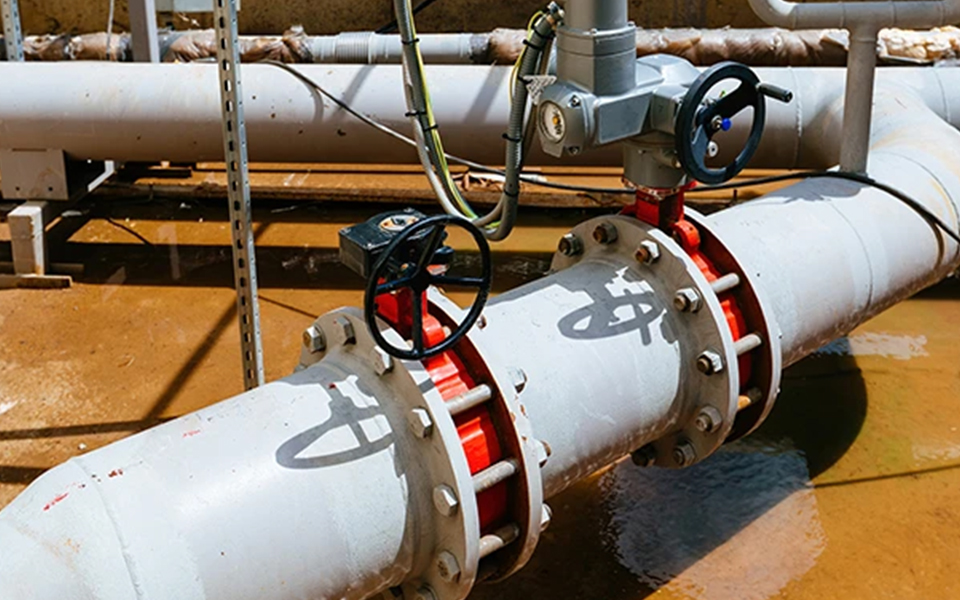
The operating method should be selected according to the degree of automation. Manual valves are suitable for small systems or scenarios that do not require frequent operation. Electric and pneumatic valves are suitable for large pipelines or remote-control requirements. When selecting them, attention should be paid to matching the power of the actuator with the valve torque to avoid overload damage.
Maintenance convenience should not be overlooked. The wear parts of a valve, such as the sealing surface and valve stem, should be easy to replace. For example, the core structure of a ball valve is simple, and the entire valve does not need to be disassembled for maintenance. For a globe valve, replacing the seal is also relatively convenient after the sealing surface wears out.
 +86 15122654356
 +86 15122654356
 sale2@tjlituo.com
 Xiaozhan Industrial Area, Xiaozhan Town, Jinnan District ,Tianjin , China